
Data Spaces for Positive Energy Districts (DS4PED)
DS4PED aims to transform cities into data-driven and sustainable urban environments by addressing key challenges in energy, mobility, and environmental planning through data space-enabled data sharing to achieve Positive Energy Districts in the cities of Rubí and Sofia.
Motivation
The DS4PED pilot aims to empower public administrations to facilitate the following changes in their respective communities.
Solving energy imbalances to reduce energy inequality and poverty
Cities can ensure that energy surpluses are distributed to those consumers who need it the most and when they need it the most. In the DS4PED pilot, tokens will be used during peak demand times or when solar production is low, ensuring that vehicle charging always uses renewable energy.
Administrative cost savings
By digitalising and automating their energy management system with more and better data (enabled by a data space and digital twins), cities can save on the administrative (including legal, contractual) challenges of managing energy communities and supporting their journey to becoming financially-sustainable Positive Energy Districts.
Cities will be able to certify their PED
By ensuring Proof of Renewable Energy Source guaranteeing energy users that their energy comes from renewable sources. The traceability solution that will be piloted would involve detailed tracking of the energy flow from solar generation to consumption, ensuring that electric vehicles are charged with 100% renewable energy. This solution can be scaled to other applications within the PED.
Measure Urbanisation Impact on the Environment
By integrating data from mobility, energy, and environmental sensors, the modelling and prediction of the impact on the urban environment will be performed, enabling targeted interventions for mitigation. By integrating climate projections, the project will assess long-term impacts, supporting climate-resilient urban planning.
Pilot Cities
DS4PED is being piloted in Rubí (Catalunya) and Sofia (Bulgaria)
Rubí, Catalunya
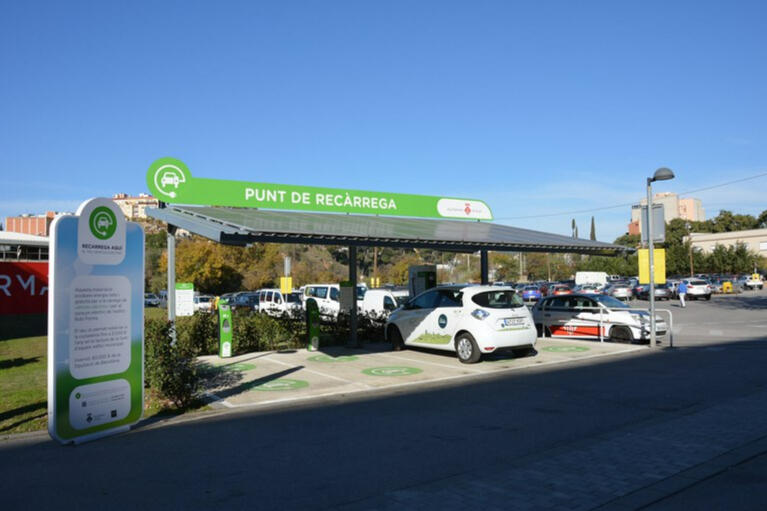
The Rubí pilot powers EV chargers with solar energy and uses digital tokens to certify and share surplus solar power for use when needed. Real-time data sharing through the Empower-X data space ensures the energy is genuinely renewable and certification is automated. This supports affordable green energy access for public buildings and households at risk of energy poverty, enabling efficient, community-focused energy sharing to realise positive energy districts.

Sofia, Bulgaria
The Sofia pilot promotes sustainability and climate resilience via data-driven urban planning. It assesses solar potential on buildings with geospatial and energy data to boost renewables, while sharing mobility and environmental data analyzes air quality, traffic, and heat for greener designs. Multi-stakeholder collaboration targets congestion and pollution, with a unified platform enabling weather predictions and long-term climate projections.
Brought to you by







Would you like to learn more about DS4PED?
Fill out the form and we'll get back to you shortly.